
Your best server is invisible to your review page
Venue ratings measure the building. ReviewBox measures the service, attributes it to the person who delivered it, and flags a bad night while the guest is still at the table. Free to start.
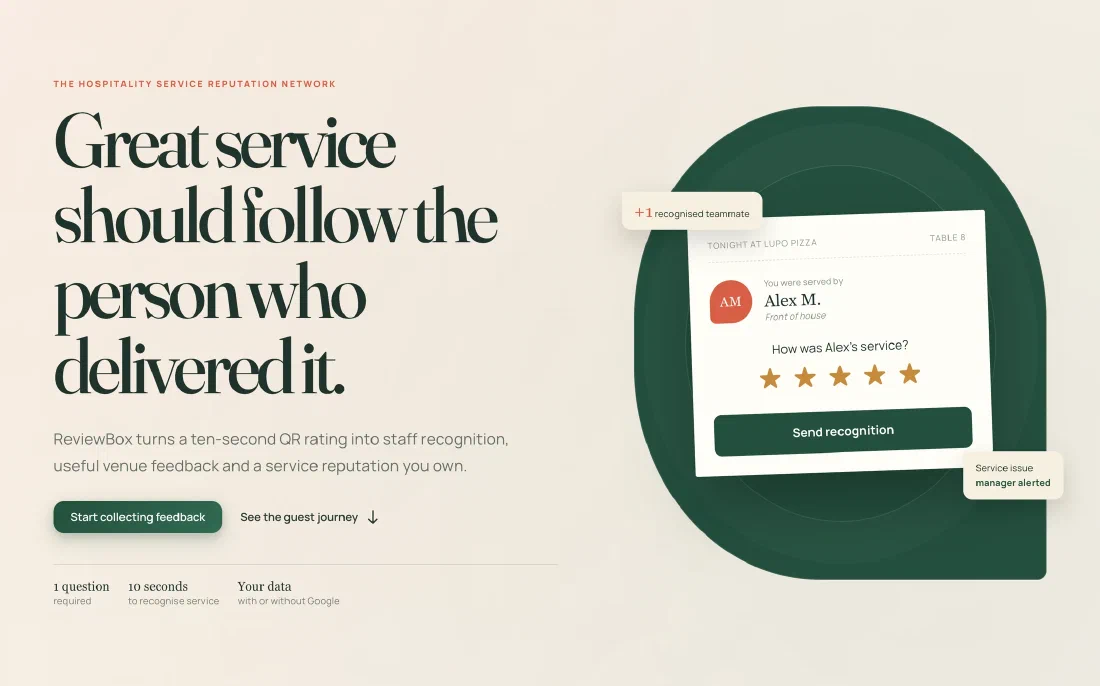
Every venue rating is an average of a building. Somewhere inside that number is the person who noticed the table was waiting, remembered the allergy, and turned a mediocre Friday into a good one. That person gets exactly the same score as everybody else on shift.
This is the problem ReviewBox was built for. It changes the unit of measurement from the venue to the service, and from the month to the moment.
Reviews are not a vanity metric
It is tempting to file reviews under marketing and move on. The research does not support that.
The most rigorous work here is Michael Luca’s study at Harvard Business School, which used Seattle government revenue data alongside Yelp ratings. He exploited the way Yelp rounds scores, so a 3.24 average displays as three stars while a 3.25 displays as three and a half, which lets you compare near-identical restaurants that differ only in the number shown to customers.
Note what the Luca result actually says. The revenue moved because the displayed number moved, independent of any change in the food. Your rating is not a report card issued after the fact. It is an input to next month’s covers.
The catch is that the venues who need reviews most are the worst placed to ask for them. Nobody on a busy floor has time to talk a guest through an app install, and the guests most likely to leave a review unprompted are the ones at the extremes.
Recognition is the other half, and it is cheaper than hiring
Australian hospitality runs one of the highest staff turnover rates of any sector, reported at around 38.7% in recent industry analysis. Every departure costs you a hiring round, a training period, and a stretch where service quality dips while somebody learns the floor.
Recognition is one of the few levers that is genuinely free to pull, and most venues do not pull it.
Here is the part most feedback tools miss: the guest already knows who gave them good service. They will happily say so. That information is being thrown away every single night because the only box on the form is about the restaurant.
One scan, three outcomes
The guest interaction is deliberately tiny. A staff card, table marker, receipt or venue sign opens the flow. No app, no account, no password.
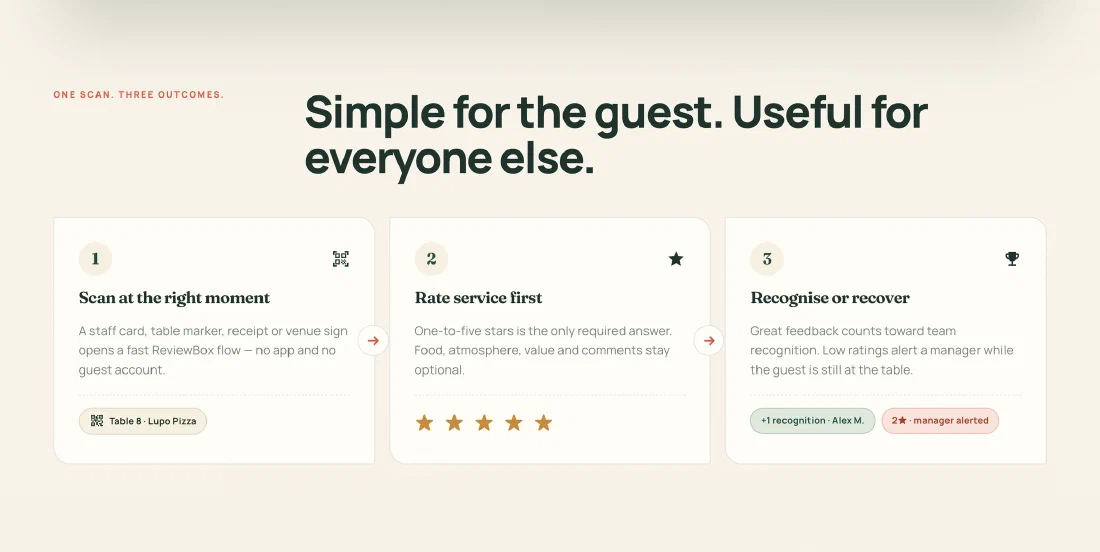
One question is required. Food, atmosphere, value and written comments are all optional. This is the single most important design decision in the product, and it is the one most often argued about. Every additional required field is a percentage of guests who abandon the form. A five star rating you actually receive beats a detailed survey you do not.
From that one answer, three things happen at once.
For the floor: work that finally shows up
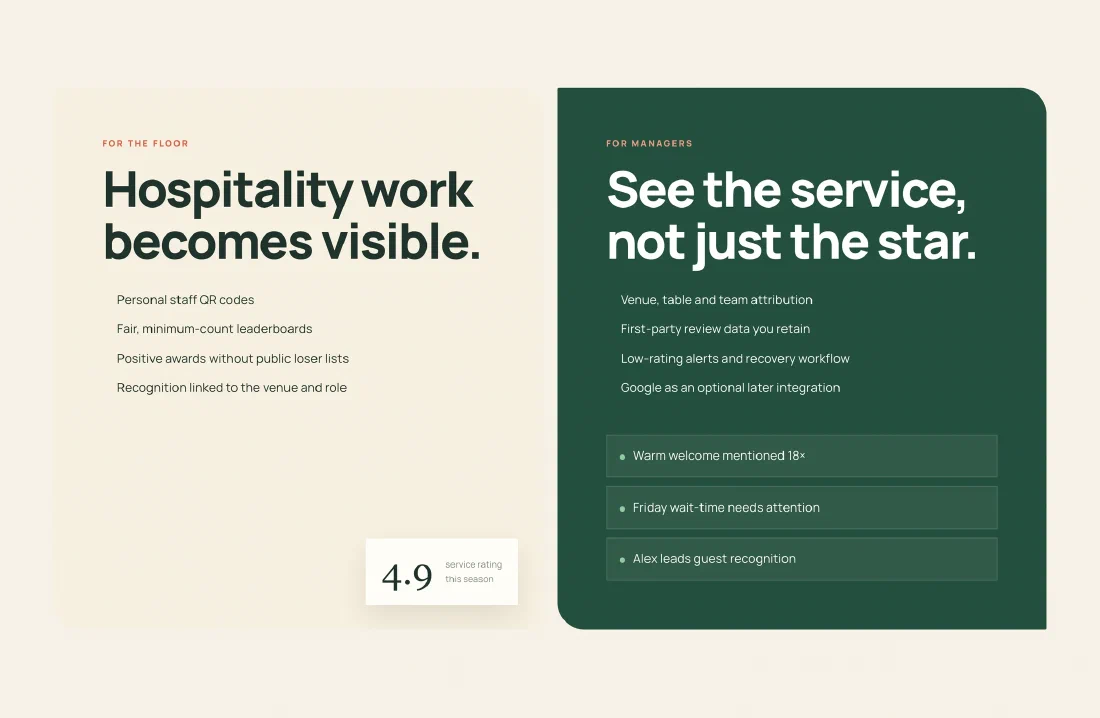
Each staff member gets their own QR code. Ratings attach to them, their role and the venue, which turns a shift into something visible.
Two details worth calling out, because they are where most recognition schemes fail.
Leaderboards use a minimum count. Somebody with one lucky five star rating does not top a board over somebody with forty. Without that threshold, a leaderboard becomes a lottery and the team stops believing in it within a fortnight.
There are no public loser lists. Awards run positive only. A public bottom three does not improve service, it just tells your weakest performer to start looking, which is the opposite of what turnover data says you want.
For managers: recover before they leave
The most valuable alert in hospitality is the one that arrives while the guest is still in the building.
A low rating triggers a manager notification in the moment, not in a weekly digest. That is the only window where the problem is still fixable: you can walk over, remake the dish, comp the round, and turn a one star into a regular. Once they have paid and gone, your options narrow to replying in public to a review that is already costing you covers.
Managers also get themes rather than raw scores, so recurring patterns surface. The warm welcome mentioned eighteen times. The Friday wait that keeps coming up. Individually those are anecdotes; counted, they are a roster decision.
And the data is first party. It stays yours, with venue, table and team attribution attached. Google becomes an optional integration later rather than a platform you are wholly dependent on from day one.
Everything around the loop
The feedback loop is the core, but a QR code alone is not a deployment. The rest of the kit is there so this survives contact with an actual floor.
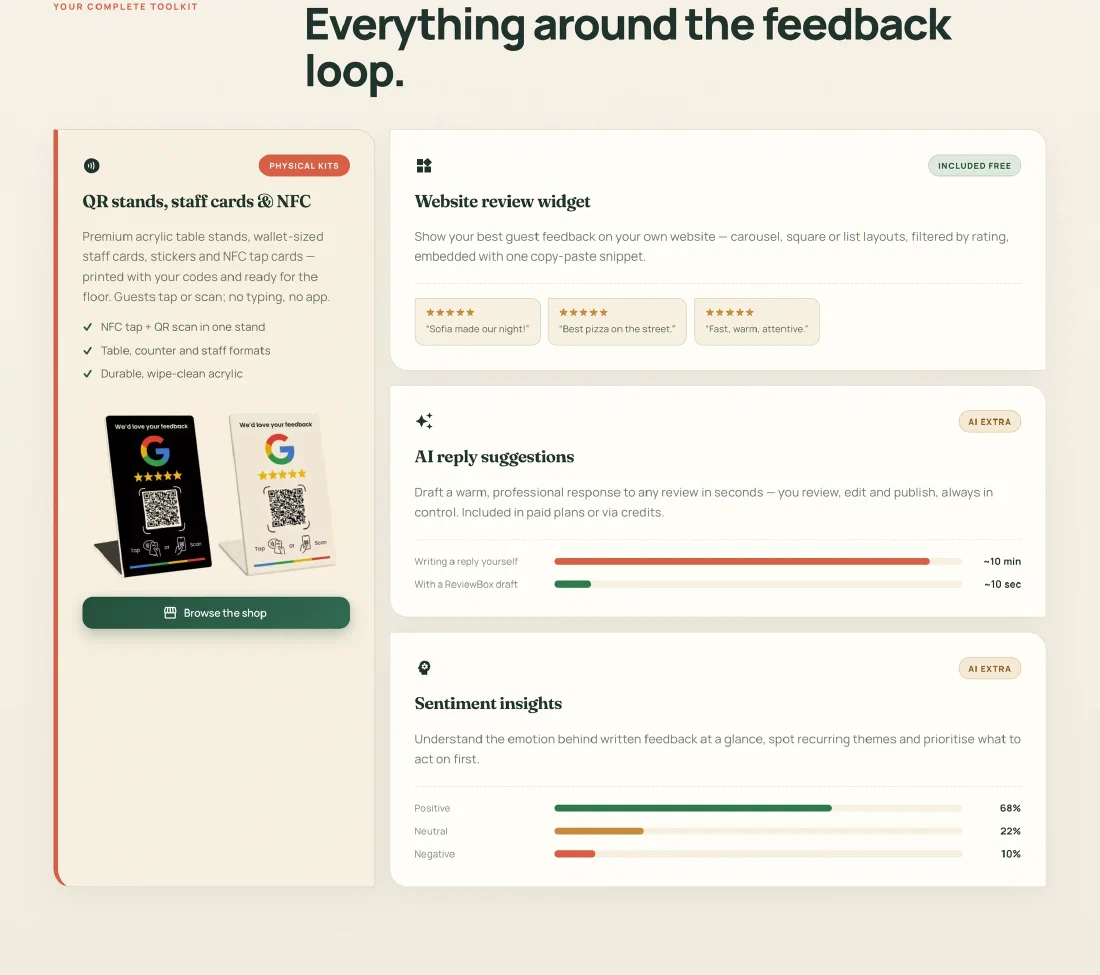
- Physical kits. Acrylic table stands, wallet sized staff cards, stickers and NFC tap cards, printed with your codes. Tap or scan, no typing.
- Website review widget. Show your best guest feedback on your own site with one copy paste snippet, filtered by rating. Included free.
- AI reply suggestions. Draft a warm, professional response in seconds, then edit and publish. You stay in control of what goes out. Given that over 80% of consumers think businesses should respond to all reviews, this is the difference between intending to reply and actually replying.
- Sentiment insights. Understand the emotion behind written feedback at a glance and spot recurring themes worth acting on.
What it costs
Nothing, for the part that matters.
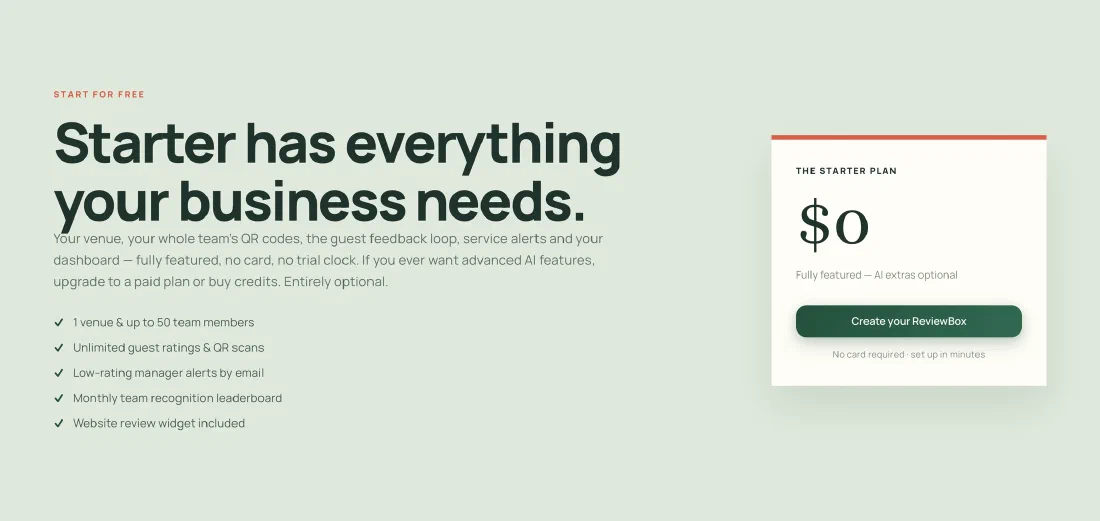
Starter is a real plan, not a countdown to a sales call. One venue, up to 50 team members, unlimited guest ratings and QR scans, low rating manager alerts, the monthly recognition leaderboard, and the website widget. No card required.
The paid plans and credits exist only for the advanced AI features. If you never want them, you never pay, and nothing degrades.
Create your ReviewBox
Set up your venue, generate your team’s codes, and put the first QR stand on a table tonight. Setup takes minutes and no card is required.
What you get
ReviewBox makes good service visible. The rating lands on a person instead of a building, a manager reaches the table while the night is still salvageable, and the review data belongs to you. The industry numbers say each of those is worth real money: a rating point is worth 5 to 9% of revenue, and a recognised employee is 45% less likely to walk.
Ten seconds, one question. That is the whole ask of your guests.